
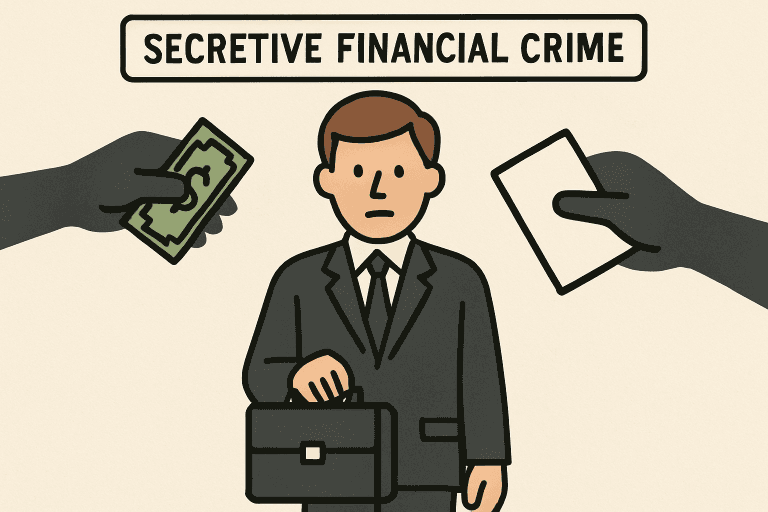
White collar crimes have become increasingly prominent in today’s financial world, affecting not only those who commit these offenses but also countless victims across society. From large-scale corporate fraud to individual instances of embezzlement, these crimes disrupt lives and erode trust. As the business landscape evolves, so too do the tactics used by those seeking illicit gain, making it essential for individuals and organizations to remain vigilant. The Martin Law Firm provides legal guidance and advocacy to those affected by white-collar crime and to those accused of such offenses, striving to uphold justice in these complex cases.
Understanding the different types of white-collar crime, their scope of impact, notable cases, and preventive measures is key for anyone in a position of financial responsibility. These non-violent crimes often operate under a veil of legitimacy, making detection and prosecution challenging. In many ways, the harm they cause can be more insidious and lasting than many traditional crimes. For organizations, fostering transparency and establishing strong ethical standards can help reduce the risk and repercussions of these offenses.
Defining White Collar Crime
The term “white collar crime” was introduced by sociologist Edwin Sutherland in 1939 to describe offenses committed by professionals in their occupational roles. These crimes typically involve elements of deceit, misrepresentation, or breach of trust. They are distinct from violent crimes in that perpetrators rely on manipulation, concealment, or abuse of authority rather than force. White collar crimes can span industries, from finance and health care to government and public administration. Much of their impact stems from offenders’ ability to operate within legitimate business structures, making them difficult to identify and stop.
In contrast to street crimes, white collar crimes are often perpetrated by individuals who are held in positions of trust. The U.S. Department of Justice and organizations such as the Federal Bureau of Investigation (FBI) categorize these crimes under a range of offenses that can include both individuals and organizations as perpetrators. Clearly understanding what constitutes white-collar crime is the first step in protecting oneself and one’s organization from being victimized or inadvertently becoming complicit in illegal schemes.
Common Types of White Collar Crimes
- Fraud: Involves intentional deception designed to secure an unfair or unlawful gain. Examples include securities fraud, mortgage fraud, and healthcare fraud. According to the FBI’s white-collar crime section, fraud remains the most commonly reported white-collar offense.
- Embezzlement: Occurs when someone misappropriates funds entrusted to them, typically by their employer.
- Insider Trading: Entails trading stocks or other securities based on confidential, non-public information that provides an unfair advantage and undermines market integrity.
- Money Laundering: The process of disguising proceeds of illegal activity to make them appear legitimate. This allows criminals to enjoy the benefits of their actions while hiding the unlawful origins of their income.
- Bribery: Involves offering or accepting something of value in exchange for influencing a person’s action in an official or public capacity.
Impact on Society
The consequences of white-collar crime ripple throughout society, affecting individuals, organizations, and entire economies. Financial losses from major cases can reach hundreds of millions of dollars, leading to bankruptcies, layoffs, and lost savings for everyday people. Perhaps even more damaging is the erosion of trust in key institutions, such as banks, investment firms, and public offices, when prominent cases come to light.
On a larger scale, widespread white-collar crime can destabilize financial markets. For example, significant instances of securities fraud or accounting scandals may trigger panic and sharp stock price declines, as seen in cases such as Enron and WorldCom. Such instability can hinder investment and long-term economic growth, leading to periods of recession or persistent public skepticism in essential financial systems. For more insights into the broader economic consequences, The New York Times offers detailed reporting on notable white collar crime stories.
Notable Cases
Several recent high-profile cases illustrate both the complexity and gravity of white collar crimes:
- Basheer Jones: The former Cleveland city councilman was convicted of bribery and wire fraud, pocketing over $130,000 by falsifying records and misusing his authority for personal profit.
- Gregory Gerber: This medical professional engaged in illegal prescription practices, resulting in a 42-month prison sentence and heavy financial penalties for his role in distributing controlled substances.
- Yue Cao: As an IT security expert in the banking sector, Cao exploited his position to siphon funds from elderly clients, demonstrating how technical skills can be weaponized for financial crime.
These and other cases underscore the diversity of white collar crimes and make clear the extent of harm possible when criminals can exploit trust and organizational vulnerabilities.
Legal Framework and Enforcement
In the United States, numerous agencies are tasked with investigating and prosecuting white collar crimes. The FBI takes the lead on many cases, especially those involving healthcare, mortgage, or corporate fraud, as well as money laundering. This agency’s efforts are bolstered by partnerships with the Securities and Exchange Commission (SEC) for financial securities offenses and the Internal Revenue Service (IRS) for tax-related crimes. The federal legal framework is intended to balance the seriousness of these crimes with due process, ensuring that those accused have access to a fair and thorough defense.
Preventive Measures
Organizations and individuals can take significant steps to mitigate the risk of falling victim to white collar crime. Some of the most effective strategies include:
- Internal Controls: Establish a system of checks and balances, including multiple approvals for financial transactions and regular reconciliations, to detect anomalies early.
- Auditing: Conduct periodic internal and external audits of financial records and business processes to uncover irregularities and deter potential misconduct.
- Ethical Training: Implement comprehensive ethics programs that make clear the organization’s values and policies, while also educating employees about potential red flags and procedures for reporting concerns.
- Whistleblower Protections: Foster an environment where employees can safely report suspected wrongdoing without fear of retaliation by using anonymous reporting systems and independent investigation protocols.
Conclusion
The threat posed by white collar crime has never been more serious. Understanding what constitutes these offenses, recognizing their impact, and learning lessons from high-profile cases are crucial steps for everyone with fiduciary responsibility. Adopting sound ethical standards, maintaining vigilance, and building transparent internal processes can minimize the risk and broader societal harm. A collective commitment to integrity, backed by a robust legal framework, will help ensure a safer and more trustworthy business environment for all.